The Marketplace Shakeup: Australia’s eCommerce Reality in 2025
Three years after mapping Australia's online marketplaces, more than half have reached end of life. What the growth narrative missed.
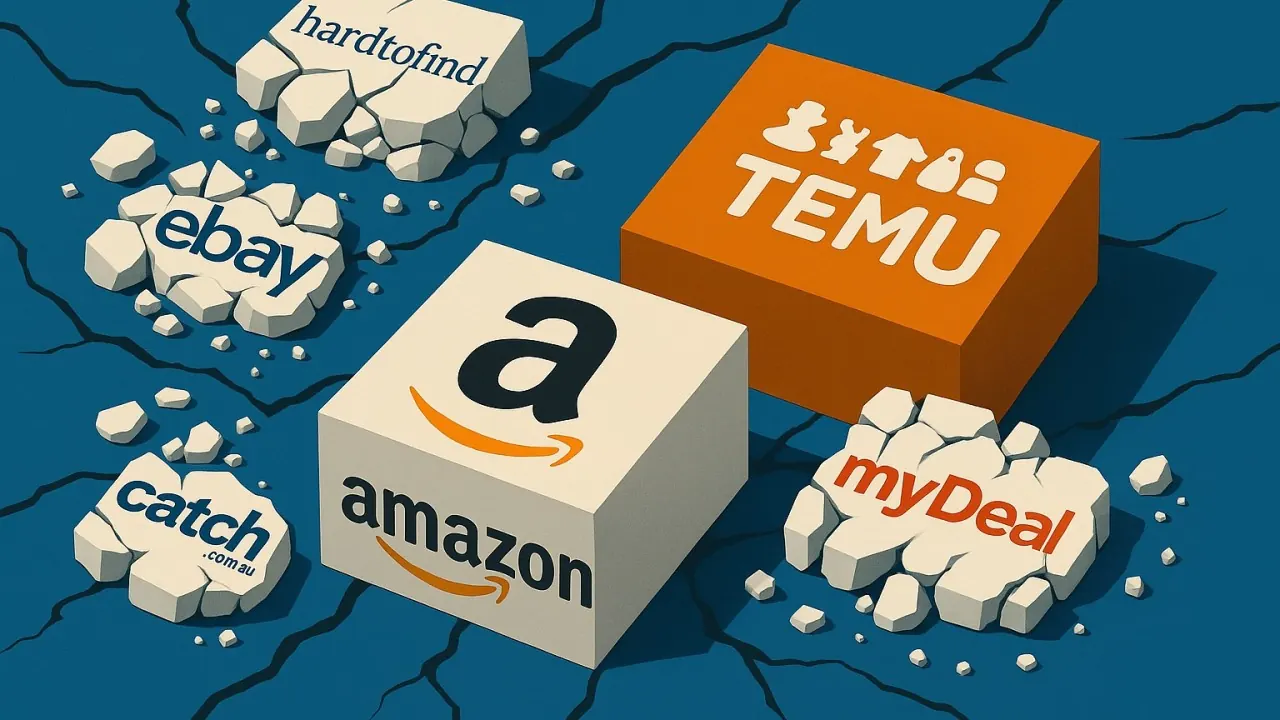
It’s been three years since I wrote about Online Marketplaces Started in Australia. More than half of what I spoke to has now reached its end-of-life. Even startups that were late to the game have come and gone. This doesn’t reflect the 'marketplace growth' narrative we’ve been sold for years, and certainly diverges from what’s depicted in the Australia Post eCommerce Report 2025.
The Truth Behind the Growth
According to Australia Post, in 2024:
- 9.8 million households spent more than $69 billion online
- 93% of Australians are concerned about the rising cost of living
- Marketplaces drove 39% of online spend growth (~$16 billion)
- About 25% of total eCommerce sales happened in marketplaces
- Online share of retail reached between 17.7% and 22.3%
So, while marketplace growth is indeed occurring in absolute dollars, it’s being driven by fewer, more powerful players, not a diverse ecosystem of options for Australian consumers or sellers.
Market Exits & Closures
A wave of closures has gutted the local marketplace landscape:
- Catch (Wesfarmers) - Ceased trading 30 April 2025 after years of losses and fierce competition from global entrants. Assets are being absorbed into Kmart Group.
- MyDeal (Woolworths) - Closing by September 2025. Woolworths is shifting to owned-brand marketplaces like Everyday Market and Big W.
- HardToFind - Paused operations in early 2025, citing the challenging economic climate.
- BikeExchange (AU) - Suspended its Australian operations from 30 June 2025 to focus on global profitability.
- TheFork Australia - Closed in March 2024, discontinuing its local reservation platform.
- Zanui, Surfstitch, and all Mosaic brands (Alquemie Group) have either ceased trading or been stripped down to assets via administration.
These aren't just business failures, they’re a structural signal that Australia cannot sustain broad, standalone marketplace models against global pressure.

Australian Online Marketplaces: Disproprortionally Spread | Mike Fowler
The New Marketplace Order
Amazon Australia: Why It's Winning
According to Pattern’s 2025 report:
- Added 1.1 million users in 2024 (now ~7.9 million annually)
- Holds ~10% of total online retail spend
- Boasts strengths in delivery speed, reliability, UX, and trust
- Launching “Haul” budget storefronts aimed at cost-conscious Australians
Amazon’s playbook of scale, speed, and certainty is now the default standard in Australia.
Temu & Shein: From Boom to Plateau
- Temu launched in March 2023; Shein a year earlier. Both saw viral success through ultra-low pricing and massive marketing.
- Temu hit $1.4 billion in sales in AU; awareness sits at 91%
- Trust remains a weak spot: Only 7% of users trust Temu's product quality
- Amazon is actively responding by launching budget-oriented product lines and storefronts to contain their rise
The Broader Marketplace Climate
- 93% of Australians shopped via a marketplace in the past year
- SMBs are being squeezed, as price-driven offshore platforms dominate
- Local retail groups are shifting to embedded marketplace models (e.g., Big W, Bunnings) that extend SKU range without threatening core 1P categories
In other words: it’s not that marketplaces aren’t growing, it’s that consolidation is swallowing diversity.
Australian eCommerce in 2025 is defined by:
- The exit of major domestic marketplaces: Catch, MyDeal, HardToFind, Surfstitch, TheFork, BikeExchange, etc.
- Amazon’s dominance: Built on infrastructure, trust, and price.
- Temu & Shein’s challenge: Rapid growth via price, now facing trust erosion and regulation.
- Retailers pivoting: From standalone marketplace ambitions to range-extended, integrated platforms.
- Small businesses: Struggling to stay relevant and profitable in a global pricing war.
What This Means for You
For Buyers:
Expect a marketplace landscape dominated by Amazon and Chinese budget platforms. Shop smart: look for trustworthy reviews, solid returns policies, and transparency.
For Brands & Sellers:
Selling on Catch or MyDeal is no longer an option. Viable platforms include Amazon AU, eBay, Big W Market, and Everyday Market, but competition is intense, and margins are tight. Remember "Your margin is my opportunity" said Jeff Bezos.
For Competing Platforms:
The days of building a generalist standalone marketplace are over. Surviving players will either need immense scale or deep niche value, or integrate within larger, trusted retail ecosystems.
And now, as AI-generated overviews increasingly dominate search results, the challenge deepens. Google’s new AI answers often summarise and serve content without a click, scraping pages but diverting traffic away from the original source.
For small businesses, this means the organic visibility they once relied on is evaporating. The cost to acquire a customer, through CPMs, CPCs, or influencer arbitrage, is rising steadily. So we’re left to ask: What hope does any independent brand or marketplace have of building something meaningful without millions in media spend or pre-existing brand equity? The internet promised a level playing field.
But in 2025, it’s clear: scale wins, and the rest are being priced out.